
The life and writings of Daniil Kharms
A starving man drags a child's sled through the frozen ruins of Leningrad in the winter of 1942, hauling a battered suitcase he guards with more care than his own life. What's inside, and why it matters more than a man, is the question this short film spends its 15 minutes answering.
"By Means Unknown" is a fiction drawn from the life and writings of Daniil Kharms, the great Russian absurdist who starved to death in a prison psychiatric ward during the Nazi siege, his real work almost entirely unpublished in his lifetime. The film braids his biography together with his own stories until the two can't be separated, an old woman who won't leave a room and then won't stay dead, a miracle worker who performs no miracles, while the state slowly closes its hand around him. It is a film about the one thing the regime could not kill: not the man, who died, but the work, which survived in a suitcase and outlived everyone who tried to erase it.
The full film is now available and can be watched above, or directly on YouTube.
For press inquiries, screening requests, or any other questions about the film, please contact us at info@abovethevoid.com.
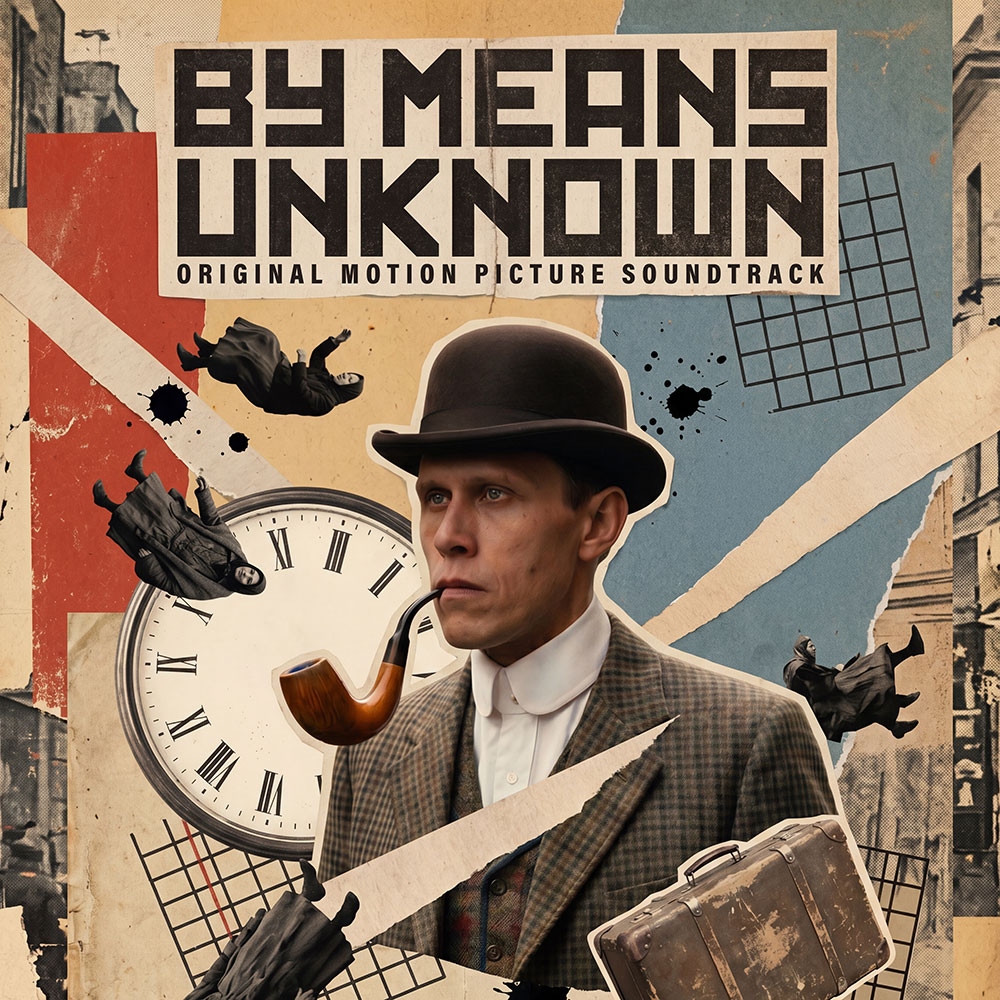

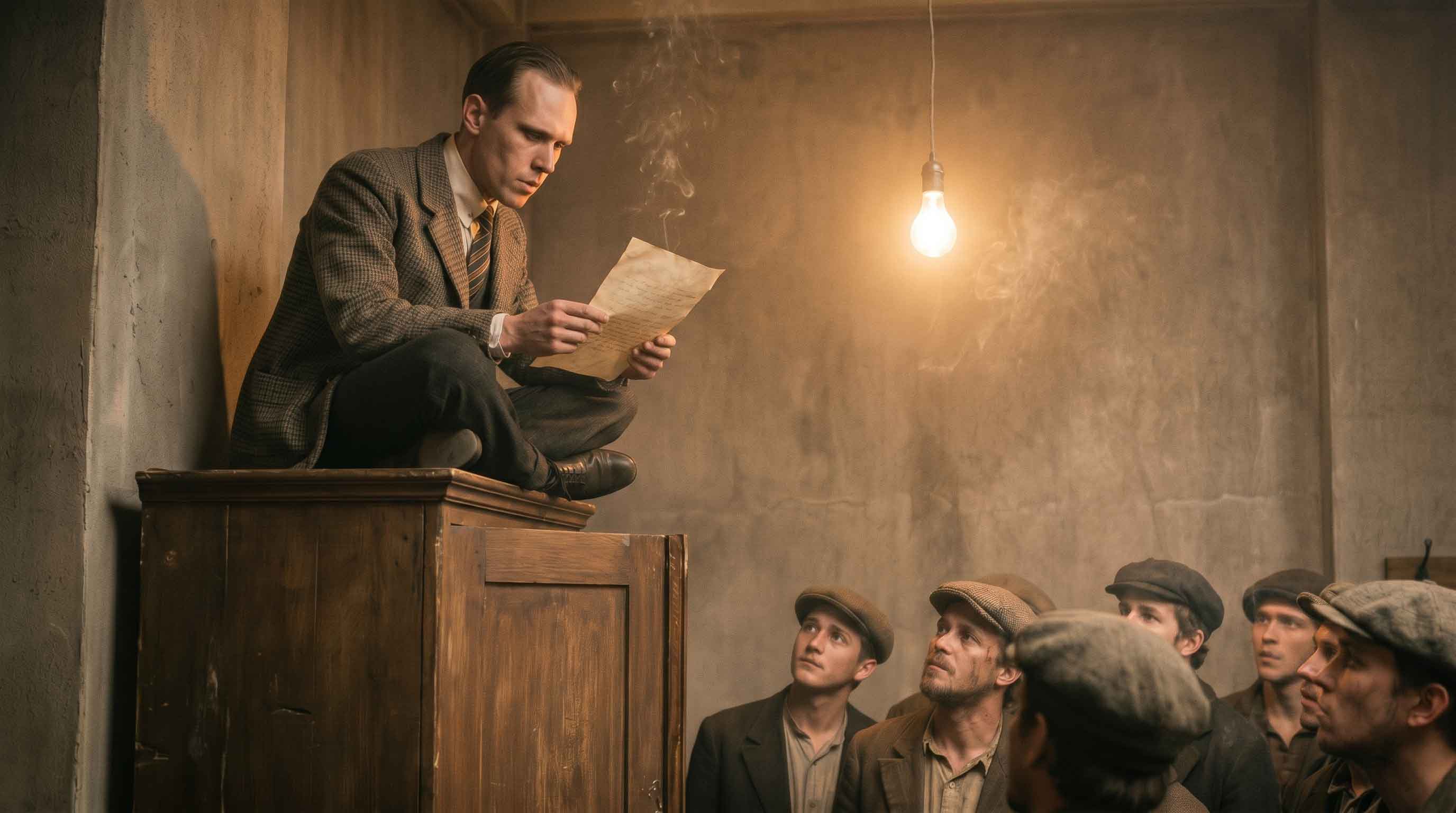

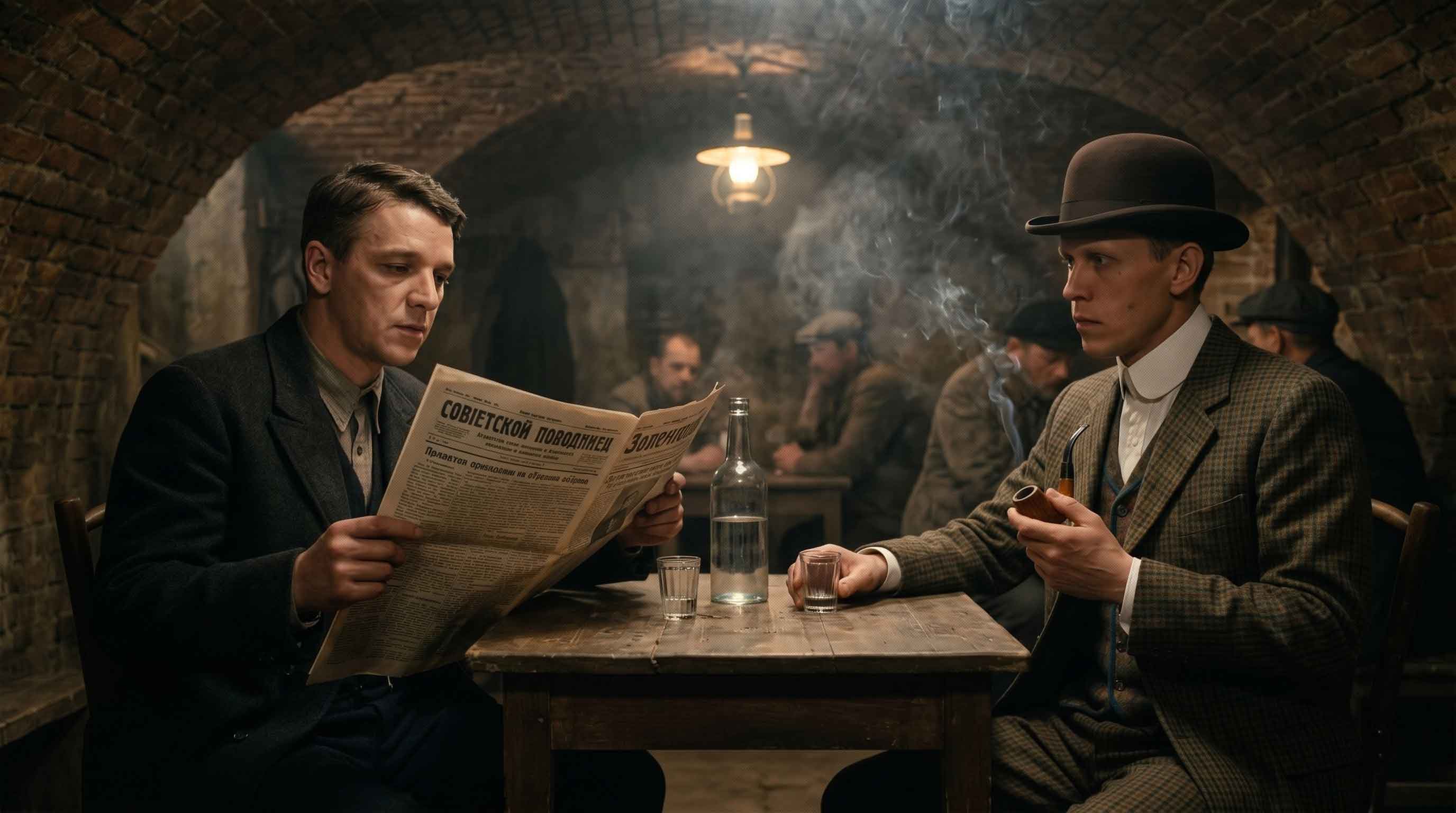


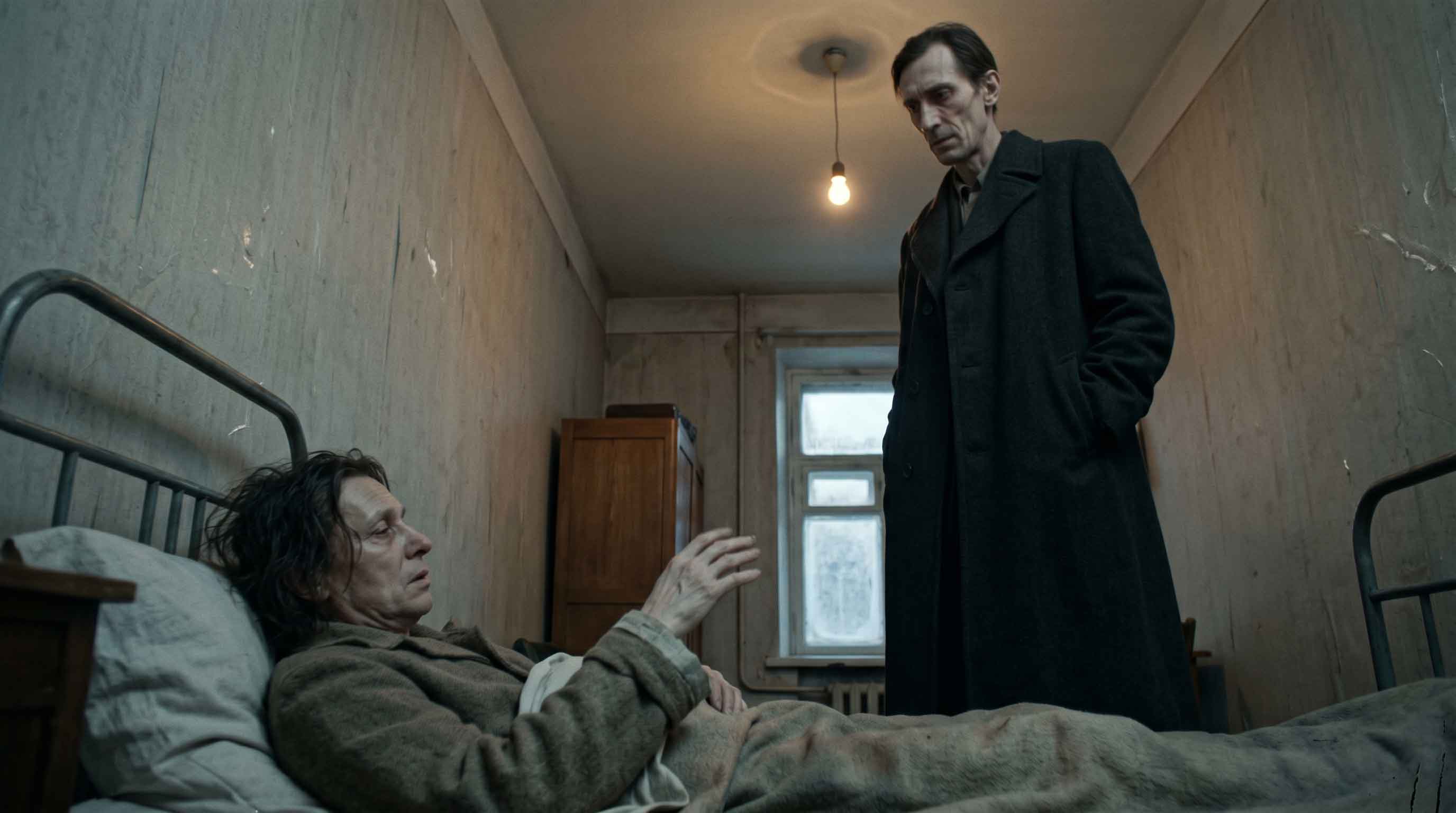


The film's central idea is that Stalin's terror turned Kharms's absurdism into documentary. He wrote deadpan miniatures in which people vanish mid-sentence and bystanders react with mild administrative boredom, and then the state did exactly that to him, arrested for "defeatist talk," declared insane, described out of existence in a case file. So the film refuses to separate fact from invention: his fictions don't appear as illustrated cutaways, they happen to him, leaking into a Leningrad that already behaves like one of his stories.
The structure is built to be a celebration rather than an elegy. The death is rendered as one of his own absurd incidents, flat and abrupt, and then the film deliberately keeps going, because the point is not that the man was lost but that the work got out. The suitcase that carries a corpse in his fiction is the same vessel that carries his manuscripts to safety in fact, the same object bearing death and then survival, and the film ends not in the cell but on the pages, in warmth, still being read.
"By Means Unknown" was produced solo using a generative AI pipeline, with each frame built and refined through DreamReel from locked character and location references to hold continuity across hundreds of shots, then animated and assembled in Adobe Premiere. The visual grammar is deliberately austere, locked-off tableaux and flat documentary realism, so the absurd events play straight and the frame never reacts, which is what keeps deadpan from tipping into whimsy.
The score moves through a single acoustic, period-true world, siege-era symphonic strings, a sardonic 1920s Soviet jazz combo for the avant-garde performance scenes, a dissonant chamber music for the descent, with one deliberate modern intrusion reserved for the interrogation, the inhuman sound of the state's machinery, before the human instruments return. Original Russian texts were freshly translated for the film, and dialogue was written new rather than adapted, so the work honors its source while standing as its own thing.
Daniil Kharms (1905–1942) was a founder of OBERIU, the Association for Real Art, the last avant-garde of the early Soviet period, whose riotous 1928 performance evening "Three Left Hours" featured poets reciting from atop wardrobes and riding tricycles across the stage. The movement was branded "literary hooliganism," shut down by a hostile press, and then dismantled arrest by arrest, its members shot, exiled, or starved.
Kharms survived in public memory for decades only as a children's writer, the despised day job that kept him alive, while his real work waited in a suitcase that his friend the philosopher Yakov Druskin carried out of the besieged city on a sled and guarded through twenty years of silence before sharing it in the 1960s. That work, alongside that of his closest friend Alexander Vvedensky, who died on a prison transport and whose manuscripts were saved in the same case, has since come to be recognized among the most original writing of the twentieth century.
This film draws on the absurdist tradition Kharms belongs to, the line that runs from Gogol through Kharms to the Theatre of the Absurd, and renders it in a deadpan, locked-off style. It stands as both a tribute and an argument: that imagination is the one thing a state cannot finally confiscate.
A short film about waiting